


Carpet Installation: What to Look Out For Before and During Installation
- Henry

- 2 days ago
- 7 min read

Before and during carpet installation, you should look out for accurate measuring, the right padding, a clean and dry subfloor, careful seam placement, proper stretching, and a clean finished result. I want to help ensure your new carpet looks clean, feels right underfoot, and holds up well over time.
In this guide, I walk homeowners through what to check before carpet installation, while the work is being done, and after everything is finished, so the final result looks the way it should and lasts longer.
Key takeaways:
Good carpet installation starts with accurate measuring, clean subfloors, and the right padding.
A power stretcher helps reduce the risk of wrinkles and loose carpet later.
Moisture matters because carpet, padding, and subfloors should not trap dampness.
Homeowners should ask what is included before installation day: removal, furniture moving, disposal, and cleanup.
After installation, check edges, seams, doorways, stairs, and how the carpet feels underfoot.
I’m Henry, and I believe carpet installation should leave your home feeling cleaner, softer, and more complete, not leave you second-guessing whether the job was rushed. I look at installation the same way I look at cleaning and repair. The finished result is what you live with every day, but the prep work usually determines whether that result actually lasts.
If you’re replacing carpet in a Northern Virginia home, I pay close attention to the details that make the difference. Accurate measuring, the right padding, checking the subfloor, thoughtful seam placement, proper stretching, clean transitions, and a thorough cleanup all matter more than most people realize.
When that work is handled carefully, your carpet feels better underfoot, looks better across the room, and is simply easier to live with day after day.
What Should You Look Out For Before Carpet Installation?

Before carpet installation, you should look for accurate measuring, a clear room walkthrough, clean prep work, and any issues that could affect the final result. I also want to know whether the installer has checked the old carpet, padding, subfloor, seams, transitions, doors, stairs, and what is included in the job.
That part matters more than people think. A solid carpet installation does not begin when the new carpet gets rolled into the house. It starts with the walkthrough.
I also want to know what is already happening in the home before installation day. Are there pet odors in the old carpet? Is the carpet loose or wrinkled? Are there stains that may have reached the padding? Are there doors that barely clear the current floor? Are there transitions into tile, hardwood, vinyl, or stairs?
Those details matter because carpet does not sit in a vacuum. It works with the padding, subfloor, baseboards, doorways, and the way your family uses the room. A playroom with kids and pets needs a different conversation than a formal living room that barely sees foot traffic.
I also like to make sure the homeowner understands what is included. Removal, haul-away, furniture moving, stair work, tack strip replacement, and transition pieces should not be vague. You should know what is happening before the work starts.
Why Does Measuring Matter So Much?

Good measuring is what helps me get a carpet installation to come out right the first time with fewer unnecessary seams, the right amount of material, and a cleaner finished look. If the measurements are off, it can lead to wasted carpet, visible seams that could have been avoided, or not enough material to finish the room properly.
That is why I never treat carpet installation like a simple length-by-width job. Once you factor in closets, hallways, stairs, doorways, and the direction the carpet needs to run, the layout takes real planning.
Some rooms look straightforward at first, but they change quickly once I account for the roll width and how the carpet should be positioned. If that layout is not thought through carefully, seams can end up right in main walking paths or other high-traffic areas where they are more noticeable and harder to protect over time.
Patterned carpet takes even more care. If the pattern needs to line up across a seam, I may need extra material to make that happen properly. I don’t see that as a waste. I see it as doing the job the right way.
I would rather explain the material needs clearly up front than have a homeowner surprised later by a seam that should have been avoided.
How Important Is Carpet Padding?
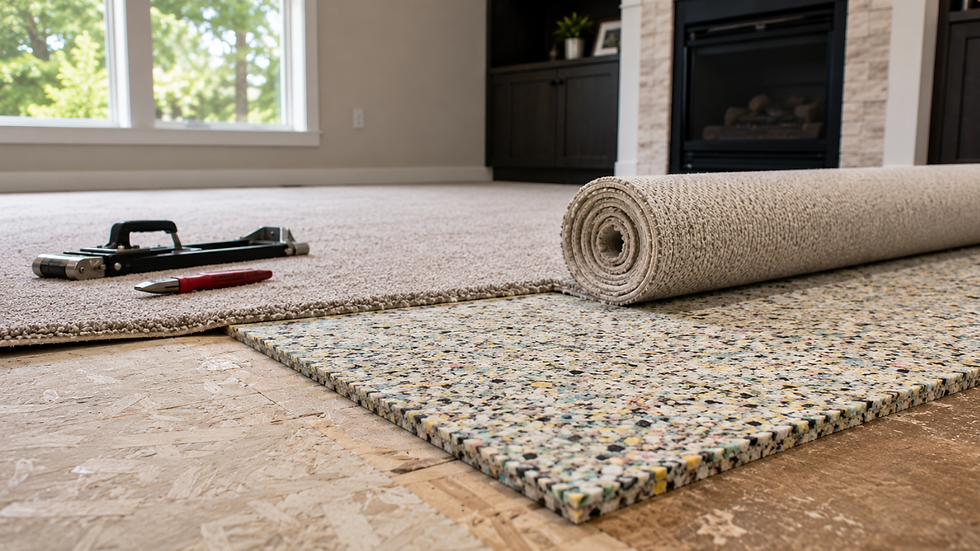
Carpet padding is important because it affects how your carpet feels, sounds, and holds up over time. The carpet is what you see, but the padding is what you feel every time you walk across the room.
I have seen decent carpet end up feeling cheap simply because the wrong pad was left underneath. If it is too soft, the carpet can flex more than it should. If it is too thin, it does not give the carpet the support it needs. And if that padding has been affected by old pet accidents or moisture, I do not like reusing it just because it is already there.
In homes with kids, pets, and normal daily traffic, I pay close attention to what is under the carpet, not just what is on the surface. If the old padding smells, crumbles, feels uneven, or has stains that soaked past the carpet backing, replacing it is usually the cleaner and more practical choice. It helps the carpet feel better, wear better, and gives you a fresher result overall.
What Should Happen With the Subfloor Before Installation?

Before the new carpet goes down, the surface underneath should be clean, dry, solid, and truly ready for it. If the subfloor has moisture, damage, odor, loose boards, squeaks, or leftover debris, those problems can carry right through to the new installation.
That part is easy to overlook, but it has a big impact on how the finished carpet feels, wears, and performs in your home. I take a close look because small issues under the carpet can turn into bigger frustrations later.
This is one of those behind-the-scenes steps homeowners do not always see, but it matters. Old staples, damaged tack strip, pet contamination, and uneven spots can all affect the final result. If the old carpet had odor problems, I would not just cover it up and hope for the best. I check the padding and the subfloor more carefully so we know what we are working with before the room is closed back in.
Moisture deserves extra attention, too. The EPA on mold growth notes that mold can proliferate on carpet when moisture and oxygen are present, and keeping indoor humidity below 60 percent, when possible, can help limit mold growth.
That is why I want the foundation right first, so the new carpet has the best chance to look, feel, and hold up the way it should. That is why I do not like covering up dampness or odor and hoping the new carpet hides it. Carpet should make the room feel better, not trap a problem underneath.
Why Do Seams Matter in Carpet Installation?

Seams matter because they affect how the carpet looks, how it wears, and how noticeable the installation is after the room is finished. A seam is not automatically a problem, but poor seam placement can be.
The best seam plan depends on the room. I try to avoid placing seams where the eye naturally lands, where light from windows will highlight the line, or where people walk every day, if there is a better option. In hallways, stairs, and open spaces, this takes planning.
A good seam should be trimmed cleanly, joined carefully, and set so the carpet lies smoothly. You may still be able to find a seam if you are looking for it, especially on certain carpet styles, but it should not be the first thing you notice when you walk into the room.
When Is Carpet Repair Better Than Full Replacement?

Carpet repair is better than full replacement when the carpet still has good life left and the problem is limited to one area. If the issue is wrinkles, fraying, a small damaged section, or a loose spot, repair is usually the more practical choice.
Not every carpet issue means you need new carpet. If the carpet is wrinkled but otherwise in decent shape, stretching may be all it needs. If one spot is damaged, a patch can make a lot more sense than replacing the whole room. If the edge is fraying near a doorway, a targeted repair may take care of it.
I like to be honest about when repair makes sense and when it does not. If the carpet is worn out across the whole room, heavily stained, holding odor down in the padding, or just no longer works for how the space is used, replacement is often the better call.
My goal is to give you the most practical answer, not push you toward more than you need. Sometimes a repair is the right fix, and sometimes replacement saves you more time, money, and frustration in the long run.
What Should Homeowners Remember Before Carpet Installation?

Homeowners should remember that a good result depends on more than the carpet they choose. It comes down to the planning, the prep, the stretching, and the finishing details behind the job.
When homeowners ask me about new carpet, I tell them the same thing every time. The carpet itself matters, of course, but the way it is installed matters just as much if you want your home to feel clean, comfortable, and put back together the right way.
Before you schedule installation, I always suggest asking the practical questions up front. Find out how the room will be measured, what padding makes the most sense, whether old carpet removal is included, how the subfloor will be prepped, where seams will be placed, how the carpet will be stretched, whether furniture moving is part of the job, and what happens with disposal and cleanup.
During the install, pay attention to communication and to how carefully your home is being treated. After the job is finished, take a good look at the room before everything gets moved back, so you can catch any concerns while it is still easy to address them.
If you’re in Woodbridge, Gainesville, Manassas, Dumfries, Dale City, Alexandria, Arlington, Fredericksburg, or anywhere in the DMV area, call or text me for a first-time estimate. I will take a look, explain what I recommend, and help you decide whether cleaning, repair, stretching, or new carpet installation is the most practical way to get your home back to clean.


Comments